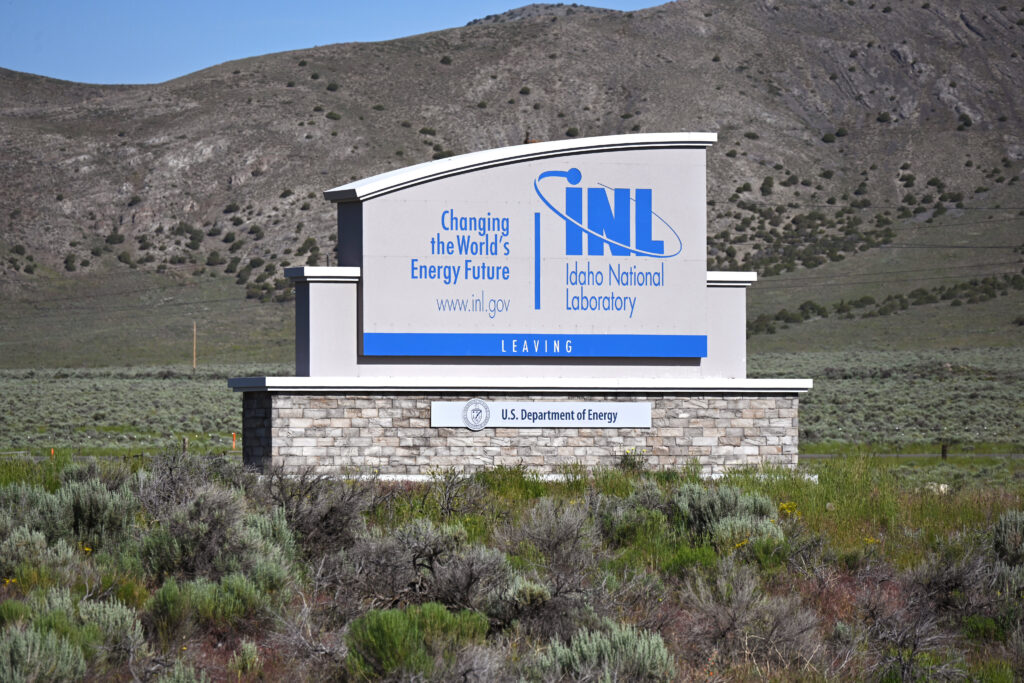
A legal battle over water rights in Idaho has pitted the federal government directly against the state — and the outcome could reshape how water is managed across the American West. At the center of the dispute is Idaho National Laboratory, a sprawling 890-square-mile nuclear research complex that could face serious operational consequences if its water supply is cut off.
The U.S. government filed a federal lawsuit on September 11 against the state of Idaho, the Idaho Department of Water Resources, and department Director Mathew Weaver. The suit asks a federal court to block a water curtailment order targeting Idaho National Laboratory and to prevent the state from administering any federal water rights in Idaho going forward. Idaho fired back on October 16, denying the federal government’s claims and filing a countersuit.
What Sparked the Dispute
Idaho manages water through a seniority-based system: when water runs short, older water rights take priority over newer ones. In May, Weaver issued a curtailment order affecting water rights established after October 11, 1900. Under Idaho law, a curtailment order cuts off water entirely for junior rights holders when they are deemed to be drawing water that senior rights holders are legally entitled to.
The U.S. Department of Energy holds a water right of 35,000 acre-feet annually in Idaho — enough water to cover 35,000 acres of land one foot deep. That right falls within the scope of the curtailment order. Under a 2024 state water settlement agreement, water users can protect themselves from water curtailment by joining a ground water district and participating in an approved mitigation plan. The Department of Energy did join the Big Lost River Ground Water District — but only for the 2026 water year, according to court records.
Rather than participating in the state’s administrative process going forward, the federal government is now challenging Idaho’s authority to enforce those rules at all. The lawsuit argues that applying state water law to a federal agency violates the U.S. Constitution’s supremacy clause, which holds that federal law takes precedence over state law, as well as the principle of federal sovereign immunity.
“Through the order, and (Idaho Department of Water Resources’) program of administering water rights, defendants are attempting to directly regulate federal agencies. However, federal installations are shielded by the supremacy clause from direct state regulation, unless Congress has provided clear and unambiguous authorization for such regulation.”
What’s at Stake for Nuclear Research
The federal government has warned that cutting off water to Idaho National Laboratory could carry serious consequences beyond the lab itself. According to the lawsuit, curtailment could disrupt nuclear safety operations, interrupt research supporting the U.S. Navy’s nuclear-powered warships, and slow the commercial licensing of next-generation reactors.
“Curtailment of INL’s water right would disrupt this national nuclear energy momentum,”
the lawsuit states.
“Forcing these facilities to curtail operations poses nuclear safety risks and would halt research support for the Navy’s nuclear-powered warships and commercial advanced reactor licensing,”
the lawsuit continued.
Idaho National Laboratory is also in an expansion phase. The lab is exploring the addition of data centers at its complex, and Idaho is among the finalist states to host a new U.S. Department of Energy Nuclear Lifecycle Innovation Campus, though no location has been announced.
Idaho Pushes Back
State officials have been unambiguous in their response. Idaho Attorney General Raúl Labrador argued that federal agencies should be held to the same water laws as any other water user in the state.
“Water is the lifeblood of Idaho, and my office will protect the water rights of Idahoans who depend on it. Our sovereign authority to administer those rights has been established for more than 100 years, and it applies to every water user in this state, including the federal government. The federal government gets no special treatment under Idaho law. We will work with federal agencies to meet their needs, but we will not sacrifice the water rights of Idaho farmers, ranchers, and families to do it.”
State attorneys also argued that the federal lawsuit
“threatens injury to other decreed water rights, and threatens to fundamentally undermine the state’s sovereign authority to allocate and administer Idaho’s waters according to Idaho water law.”
Governor Brad Little’s office echoed that position.
“Gov. Little has a strong track record of fighting for Idaho’s water sovereignty, and he will continue to put Idaho first. The state of Idaho continues to work responsibly with the Department of Energy toward a mitigation plan that meets everyone’s needs and protects Idaho’s water resources.”
State attorneys underscored the broad implications of how the court resolves the federal-versus-state authority question:
“This disputed issue is ripe for resolution because resolution of the issue will affect the administration of every other decreed water right in the coalition delivery call proceedings — both state law-based water rights and federal reserved water rights.”
There is also a procedural question the court will need to address: whether the case belongs in federal court or state court. With drought conditions continuing across Idaho and much of the West, the case is drawing close attention from water users, energy officials, and environmental advocates who understand that the ruling could set a precedent for federal water use across the region. Full court documents from the case are available via the Idaho Capital Sun.