Federal Court Limits Energy Department’s Emergency Powers on Coal Plant Operations
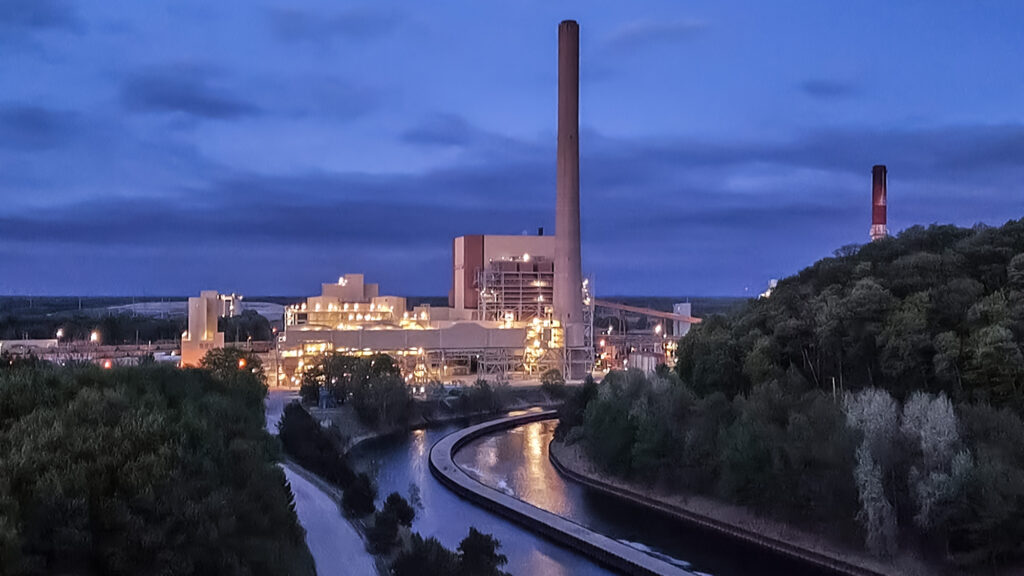
The U.S. Court of Appeals for the D.C. Circuit has recently curtailed the Department of Energy’s ability to extend the operation of aging coal-fired power plants, a decision likely to impact similar cases nationwide. This ruling focuses on the J.H Campbell plant in Michigan, which was kept operational past its intended closure date due to an emergency order by the Trump administration.
In May of the previous year, the Trump administration’s Energy Department employed emergency powers under the Federal Power Act to prevent the 64-year-old Campbell plant from shutting down. The rationale was to prevent energy shortages and support data centers’ energy needs. However, the court found this action overstepped legal boundaries. As Judge Cornelia Pillard noted in her opinion, the emergency statute serves as a “narrow, last-resort backstop.” The detailed ruling can be accessed here.
President Donald Trump, on his first day in office in 2025, declared a “national energy emergency” and urged federal entities to boost energy production, especially from fossil fuels. This court decision marks a significant legal hurdle against the administration’s interpretation of its emergency powers.
According to Ted Kelly, the Environmental Defense Fund’s U.S. Clean Energy director and lead counsel, this ruling does not negate the existence of an energy emergency. Instead, it constrains how the emergency powers may be practically applied. Kelly remarked, “You can say there’s an ‘energy emergency’ as much as you want — even if you’re the president. But what you can actually do depends on what the real facts on the ground are and what the law actually lets you do in different situations.”
The J.H. Campbell plant has been identified as the most polluting among those kept open under the Trump administration’s directive. From its extended operation, the plant released 1,000 tons of nitrogen oxides, 2,000 tons of sulfur dioxide, and 140 tons of particulate matter by the end of June. These emissions could potentially trigger approximately 100 new asthma cases among the 3,000 residents near West Olive, Michigan. Consumers Energy Company, which operates the plant, has incurred $259 million in costs, which it aims to recover from customers across Michigan and 10 other states. For more information, visit the source.
While the court’s decision does not mandate an immediate shutdown of the plant, environmental advocates hope for a voluntary compliance by the Trump administration. If not, the ruling could be contested, leading to further delays. Gavin McCabe from the Natural Resources Defense Council, another party in the lawsuit, suggests the ruling could lead to a Supreme Court review.
This legal decision sets a precedent that necessitates a genuine emergency to justify keeping coal plants operational. Other lawsuits challenging similar actions have been on hold, awaiting this federal court’s outcome, indicating potential shifts in future rulings.
The contrast between the administration’s stance on renewable energy and its efforts to maintain coal plants has raised questions. By August, the administration had allocated around $4 billion to halt offshore wind projects capable of supplying energy to over 15 million homes. McCabe questioned the logic, asking, “Why would the administration be blocking sources of energy that are ready to come online in favor of keeping online something that has been set to be retired?”
Original Story at grist.org