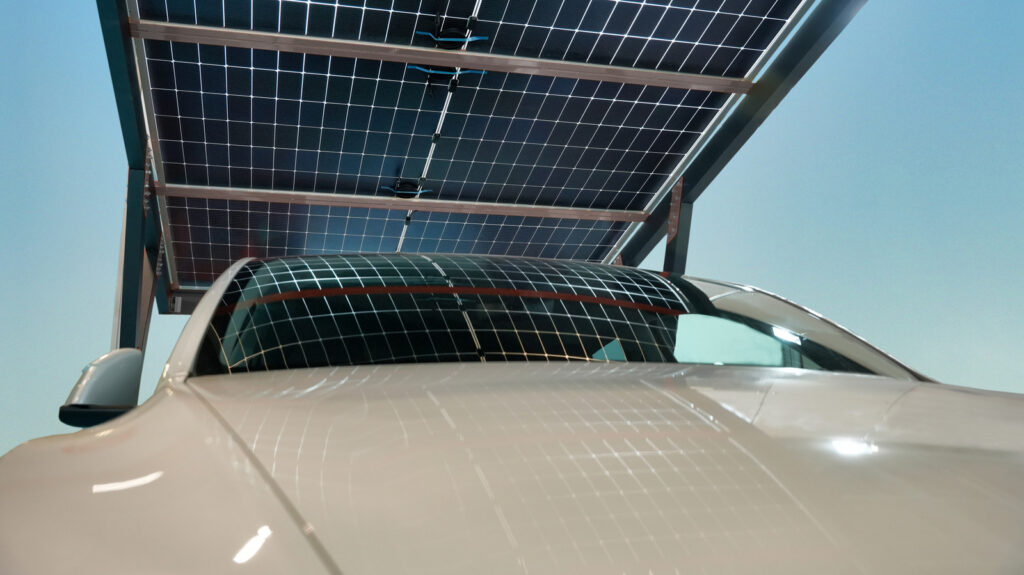
Exploring the realities of solar-powered electric vehicles reveals the challenges of integrating solar technology into car designs.
Imagine a world where electric vehicles (EVs) can recharge their batteries by merely sitting under the sun’s rays. While the concept of a solar roof on an EV is appealing, the practical application faces significant hurdles. The limited surface area of a car roof restricts the potential for solar energy capture, and the substantial power demand of modern EVs adds to the complexity.
Increasing the number of solar panels might seem like a viable solution, but it introduces additional complications. More panels mean added weight, requiring the electric motors to consume more energy. Moreover, the extra hardware can affect the vehicle’s aerodynamics, leading to increased drag and reduced efficiency.
Innovative strategies, such as stretchable solar panels for parked vehicles and lightweight EV designs, are under exploration. Nonetheless, these solutions bring their own set of implementation challenges.
In contrast, recreational vehicles (RVs) are better suited for rooftop solar systems. For instance, Winnebago’s 210W solar setup on the Revel Sport model powers amenities like lights and refrigerators, without the expectation to propel the vehicle itself.
A solar roof can only generate so much electricity
Consider the numbers. According to the EPA estimates, a typical 2025 EV model requires 39kWh for every 100 miles, translating to 390Wh per mile. Suppose a 400W solar array is installed on roughly 22 square feet of an EV’s roof. If it operates at full capacity for four hours, it generates 1.6kWh, sufficient to cover only about four miles based on the average energy consumption rate.
These figures assume optimal conditions, which are rarely guaranteed. Factors like shade, cloud cover, high temperatures, and imperfect parking angles can all diminish solar output. The limited rooftop space exacerbates the situation. Yet, the idea of Squad Mobility’s solar-powered microcar remains intriguing, featuring a 250W roof panel and a lightweight design tailored for urban environments.
Larger solar arrays can increase the vehicle’s weight and may also heighten aerodynamic drag if positioned above the bodywork. Integrating panels flush with the roof minimizes aerodynamic issues but does not solve the space constraint. Nissan’s Ao-Solar Extender prototype exemplifies a solution, with its retractable 300W panel for driving and an extendable panel that boosts output to 500W when parked.
Aptera’s solution is a very different kind of EV
Aptera, instead of accommodating expansive solar panels on a conventional car, has created an EV with a unique design. The vehicle features a streamlined, teardrop-shaped body with three wheels, two seats, and is built from lightweight composite materials. This is starkly different from the average 2025 EV.
Aptera aims for an energy consumption rate of 100Wh per mile, which is significantly lower than the EPA’s median for EVs. Solar panel tests have shown promising results. In July, TÜV Rheinland recorded 4.23kWh of energy transferred to an Aptera prototype’s battery, equating to about 42 miles of solar range, assuming the company’s efficiency target is met. For someone with a short commute and access to sunny parking, this could mean less frequent charging. However, factors like garage parking, extended cloudy periods, and long trips can alter this equation. The test confirmed the energy collected, not the actual driving range.
Achieving Aptera’s ambitions isn’t straightforward. For instance, Lightyear ceased production of its first solar EV in January 2023 shortly after launch. The company’s operating arm, Atlas Technologies, subsequently went bankrupt.
Aptera has yet to finalize the retail price but targets $40,000 for its Launch Edition. According to an October 1 SEC filing, the company intends to start producing its initial 40 vehicles by the end of 2026, with deliveries slated for early 2027, contingent on securing financing, supplier performance, and regulatory approvals.
Original Story at www.engadget.com