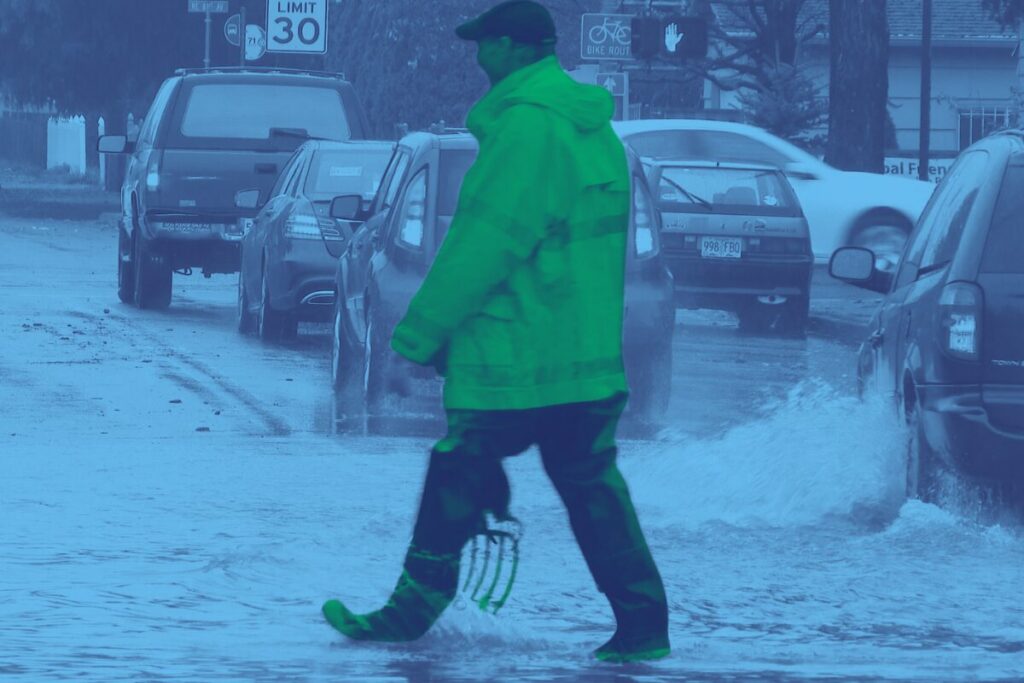
When a flash flood surged through Las Vegas last October, one woman stood at the edge of the rushing water facing an impossible choice — and her story reveals something important about how millions of American families teeter on the edge of financial and healthcare catastrophe every single day. For too many workers, losing a job doesn’t just mean losing a paycheck. It means losing the health coverage that keeps a family safe.
On October 11, the remnants of Tropical Storm Rachel dropped record rainfall on Las Vegas, sending floodwaters churning through channels behind the LINQ hotel, just steps from the Strip. A bystander captured a video of a woman standing calmly at a railing, staring across the torrent. When the person filming urged her to step back from the dangerous water, she explained her situation without panic: she worked at a property on the other side of the flood. The man assured her no employer would fire someone for being late during a flash flood. Her reply was quiet and matter-of-fact. “No,” she said. “I am.”
She was at 11.5 attendance points out of a maximum of 12 under her employer’s tracking system. One more half-point — the penalty she would receive for arriving late that afternoon — and she would lose her job. So she stood at the edge of dangerous floodwaters, calculating whether crossing was worth the risk of termination.
What Losing a Job Really Costs a Family
For many Americans, this moment goes beyond a dramatic workplace story. It cuts to the heart of what healthcare access actually looks like for working families. In the United States, employer-sponsored health insurance is the primary source of coverage for millions of people. When a job disappears, so does that coverage — often immediately, leaving families scrambling to find and afford alternatives.
The financial stakes are enormous. Research shows that two-thirds of personal bankruptcies in America are tied to medical debt. That means a lost job, a lapsed insurance policy, and one unexpected illness or injury can cascade into financial ruin for an otherwise stable family. The woman at the railing understood this equation intuitively. Half an attendance point wasn’t an abstraction — it represented her family’s healthcare, financial security, and peace of mind.
Point systems like the one her employer used are common in service industries. They assign numerical penalties to absences and tardiness, and they typically make no distinction between circumstances. A medical emergency, a sick child, a broken-down bus, or a raging flash flood all count the same. Workers with chronic illnesses, those caring for sick family members, or those facing unavoidable emergencies accumulate points the same way as someone who simply overslept. The system doesn’t ask why. It just counts.
When Geography and Policy Combine Against Workers
The setting of this story adds another layer worth understanding. The LINQ’s parking garage and surrounding structures sit near engineered flood channels that are a known feature of Las Vegas’s water management infrastructure. Flooding near the Strip during significant rainfall isn’t unusual. Yet when the water surged that afternoon, no apparent accommodation was made for employees unable to safely reach their workplaces.
Nevada law does establish some baseline paid leave protections for workers, but efforts to prevent employers from penalizing workers during unavoidable emergencies have historically run into opposition from the gaming and hospitality industry. Corporate titans in the casino and resort sector have channeled significant money into state politics, helping shape the regulatory environment that governs how workers are treated.
For families, this political dynamic has real healthcare consequences. When workers in large service industries lack meaningful protection against arbitrary termination, they face the constant threat of losing employer-sponsored insurance. That threat shapes behavior in ways that affect health outcomes — people delay doctor visits, skip preventive care, and avoid filling prescriptions when they’re worried about job security and the cost of losing coverage.
The Broader Picture: Coverage, Stability, and What Families Need
The experience of the woman on the Las Vegas floodplain is an extreme example of a situation faced in quieter ways by working families across the country. Employer-sponsored health insurance ties coverage to employment in ways that leave many people vulnerable. A serious illness, a natural disaster, a family emergency, or even a rigid attendance policy can sever that connection — and with it, access to doctors, prescription medications, mental health services, and preventive care.
Countries with different healthcare and labor policy structures handle this differently. Comparative research from the World Justice Project, which measured labor rights across 142 countries, found that many nations provide stronger worker protections and universal healthcare access that is not dependent on maintaining continuous employment. For families in those systems, a job loss — while still painful — does not automatically mean losing access to a doctor or facing catastrophic medical bills.
For American families navigating the current system, the connection between stable employment and healthcare access remains critical. Policies that protect workers from losing jobs during unavoidable emergencies aren’t just labor issues — they are healthcare access issues. They determine whether a family keeps its insurance, whether a parent can take a child to the doctor, and whether a household can absorb the financial shock of an unexpected medical bill without falling into debt.
The video from Las Vegas went viral because it captured something visceral and true: a person standing in real physical danger, unwilling to move, because the economic danger on the other side felt just as threatening. For millions of working families, that tension — between personal safety and the fear of losing the job that funds their healthcare — is not a moment caught on camera. It’s a quiet, persistent feature of daily life.
Support for independent journalism helps ensure these stories continue to be told and that communities have access to the information they need to understand how policy decisions shape their health and financial security.